84, Charing Cross Road

Recently finished reading Helen Hanff’s 84, Charing Cross Road. Reading it is quite an experience. It is one of the books I have read and enjoyed repeatedly- at least once a year. It has been a favorite travel companion. This slim and small volume of letters exchanged between Helen Hanff, then a budding writer in New York and Marks & Co., London based sellers of second hand (used) books has become a must read for all book lovers. Books about books is a fascinating category to read and 84, Charing Cross Road occupies a special place in this category. Deservedly so. The title of the book is actually the address of the bookshop Marks & Co. It contains correspondence between Helen Hanff and the staff of Marks & Co.(chiefly Frank Doel, the manager of the bookshop) and even with some of the family members of the staff including Franks’ wife Nora from 1949 to 1969.

Helen Hanff saw the advertisement of Marks & Co. in the Saturday Review and wrote a hesitating letter enquiring about some books. She described herself as a ‘poor writer’ with antiquarian taste in books. From here onwards, developed a relationship, first very formal and then much informal and affectionate between her and Frank Doel, the manager of the bookshop and other staff. She kept ordering books, sharing her opinions about them, sharing her tiny problems with buying new books or rushing to the distant post office for sending a postal money order. Initially Frank Doel signed his letters first as FPD and then as Frank Doel. It was the time when England was going through some hard days after the Second World War and rationing of food items was in place. So Helen kept sending ‘To Her Friends at 84, Charing Cross Road’ small gifts of food parcels along with season’s greetings. They were shared by everybody including Frank’s family. They all – including Frank’s wife Nora- used to write to her with gratefulness. Helen wanted to visit England. She liked to country and she wanted to meet all her friends, particularly Frank in person. We read how she planned and then forestalled her proposed visit to England due to some problems or the other. She did finally visit England but it was in the summer of 1971. Three years after Frank Doel passed away from peritonitis from a burst appendix. The shop had closed after Frank’s death but Helen still visited Charing Cross Road and was received enthusiastically by Frank’s family and friends. She became a kind of celebrity there with people queuing up for her autograph.

This small book celebrates love of books and the warmth in human relationships. The books that Helen Hanff ordered tell us a lot about her taste. She was one of those mentored by the English poet and critic Sir Arthur Quiller-Couch or ‘Q’ as he was known and to whom he never met personally. Her taste was guided to a great extent by Quiller-Couch. It is informing as well as entertaining to go through a list of books she ordered. A partial list of these books can be found on the internet after a Google search.

84, Charing Cross Road was later made into a stage play, a television play as well as a film. The book is still read, enjoyed and celebrated widely. The website http://www.84charingcrossroad.co.uk gives us a history of the book, the bookshop – Marks and Co. and also details about the dramatis personae of the book. Helen Hanff passed away in 1997 at the age of 81 leaving behind a memorable classic, a bibliophile’s delight. You certainly can’t read this book, as a critic said, ‘without a lump in the throat.’ Books like this enrich life and give enduring pleasure.

Reading and Relishing the TLS


TLS tree

I subscribed to the TLS (The Times Literary Supplement) in November last year. Subscribing to this premier international weekly of literary and cultural debate was a dream come true. It was a long cherished dream. I have been looking forward to this moment since more than last ten years. I first came to know about the TLS when I was reading for my MA in English. I was studying T.S. Eliot’s ‘Tradition and Individual Talent’ and came to know that this essay was first published in the Times Literary Supplement in 1919. After a curious Google search, I found out the TLS website. TLS then gave free sample copies. I requested one. Fortunately it turned out to be the centenary issue of the TLS.

I was highly impressed with the journal’s quality of print and content. The range of subjects was indeed extremely diverse and wide. I fell in love with this journal- with its provocative reviews, the animated letters to the editors, the Commentary section and even with the advertisements of books, journals and literary and other intellectual events that it carried.

Ever since then I had been dreaming of subscribing to the TLS. I resolved to do so when I would start earning enough and the day came in November last year when a special subscription offer made it possible for me to subscribe to the TLS at a considerable discount. It is not otherwise easy for a middle class Indian to subscribe to periodicals like TLS as they are expensive. Understandably, I was overjoyed when I got in my hands, my first issue of the TLS. It represents for me, a vibrant intellectual culture and true scholarship. I have always relished reading the TLS. Undoubtedly, the pleasure will only grow in future.

I am now waiting for the book ‘Critical Times: The History of the Times Literary Supplement’ (which I recently ordered). It is a history of the TLS written by Derwent May in 2002. I am curious to go through the hundred year journey of this wonderful weekly which has gone through all the thick and thin and not only sustained, but constantly improved its quality- both externally and internally. I first saw the advertisement of this book in the centenary issue of the TLS and wanted to read it. I am quite sure that I will relish this book too. Will write about it in this blog after reading it.

Babel Everywhere: How Translation Drives the World


Nataly Kelly, Jost Zetzsche
Found in Translation: How Language Shapes Our Lives and Transforms the World
270 pp. Perigee Books. Paperback.
Rs. 966.  ISBN:978-0-39953-7974


Translation and interpretation, to quote an anonymous interpreter from Jost Zetzsche and Nataly Kelly’s book “Found in Translation: How Language Shapes Our Lives and Transforms the World”, is an ‘underappreciated’ work. The authors have done a brilliant attempt in this book to give translation and interpretation its proper place in the field of human communication. Translation makes the world communicate. Language affects each and every aspect of our lives in some form or the other through translation and interpretation. Consciously or unconsciously, we are helped, rescued, entertained, loved, informed and delighted continuously by the process of translation.

Nataly Kelly and Jost Zetzsche tell us interesting stories as to how translation and interpretation touch every facet of human life from healthcare and disaster management to business and commerce to entertainment, religion and technological advancement in times of war and peace. The authors have illustrated their points with interesting anecdotes which they painstakingly collected after interviewing translators and interpreters (both professional and amateur) from different corners of the globe. These include a ninety-one year old man who interpreted for Nazi war criminals during the Nuremburg trials, an Inuit in Arctic and a University Professor in New Zealand working for the preservation of Maori language. Continue reading

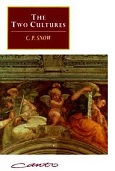
The Two Cultures: Story of a Great Debate

[This is an article on the book The Two Cultures by Sir C.P. Snow. This book is actually based on  the Rede Lecture that C.P. Snow delivered in Cambridge in 1959. I’d written this article in 2010.]

The year 2009 marked golden jubilee of one of the great intellectual debates in the contemporary intellectual history- a debate which is still alive and which still attracts the attention of even the most casual student of intellectual history- let alone academicians, scholars and public intellectuals- worldwide.

It was Sir C.P. Snow (later Lord Snow) who, on the afternoon of 7th May 1959 delivered a lecture in the University of Cambridge. The lecture was entitled “The Two Cultures and the Scientific Revolution”. Snow, eminent scientist, novelist, civil servant and an industry adviser was a well-known public intellectual in Britain. Himself a Cambridge educated scientist, Snow had long ago joined and later left the famous Cavendish laboratory of Cambridge. He was invited on 7th May 1959 to deliver the annual Rede Lecture in Cambridge which is still a significant event there.

Snow, in this lecture, for the first time, drew the attention of the world towards the yawning gap – the great divide between science and humanities and lamented the fact that while scientists are expected to be well read in the literary classics and well-acquainted with ‘high culture’, the humanities people never take the trouble of making themselves familiar with even the most basic knowledge of science. He took the humanities people to task for their snobbish attitude towards science and for their dismissal of scientific enterprise as materialistic pursuit.

Snow’s lecture sparked off a great controversy and invited passionate responses both for and against his thesis. This lecture was first published as a book entitled ‘The Two Cultures and the Scientific Revolution’ in 1959. The subsequent debate invited so passionate responses (particularly from the likes of F.R. Leavis and Lionel Trilling) that Snow had to answer the whole debate by publishing ‘The Two Cultures: A Second Look’ which was later included in the combined edition of the book published in 1963.

The book under review is the same combined edition published by Cambridge University Press with an introduction by Stefan Collini (Professor of English Literature and Intellectual History in Cambridge University). The book is worth reading as much for the sparkles of Snow’s ideas as for Professor Collini’s rich and comprehensive introduction which runs well past sixty pages and acquaints us with the whole history of this debate and its present and future.

Collini, in his introduction, tells us the history of the idea of the two cultures and also of the debate that followed Snow’s lecture. He gives us a brief biography of Snow and explains how the idea of the ‘two cultures’ had taken shape in Snow’s mind much earlier. After introducing Snow’s ideas at length, Collini gives us a detailed and comprehensive account of the great debate that followed the publication of Snow’s lecture- particularly, the controversy between Snow and F.R. Leavis. Next part of the book contains the actual Rede lecture by Snow.

Snow begins by alluding to his own previously published work on the subject and then goes on to elaborate his ideas. The lecture is divided into four small sections namely-

  1. The Two Cultures, 2. Intellectuals as Natural Luddites, 3. The Scientific Revolution and 4.The Rich and the Poor.

Snow’s chief concern is the huge gap, the unfamiliarity and the hostility among the literary intellectuals and the scientists who represent ‘the traditional culture’ and ‘the scientific culture’ respectively. He calls the literary intellectuals as ‘natural Luddites’ (i.e. the people who are naturally averse to the scientific and technical progress and have little or no scientific knowledge). This separation, according to him, is mainly a result of the faulty British education system which introduces specialization too early. Snow’s advocacy for a better understanding among the two cultures was based on his concern that application of science is the only way of solving human problems. It is the only way of bridging the gap between the rich and the poor in the world and because most of the policy makers and administrators are trained in traditional culture, they remain ignorant, even insensitive, when it comes to the application of science for the removal human miseries. This need for a better understanding among the two cultures is needed the most in academies, because it is from there that the administrators, policy-makers, intellectuals and researchers come out.

The second section of this book contains ‘The Two Cultures: A Second Look’ which Snow wrote four years later in 1963 and answered the whole debate that followed his 1959 lecture.

Snow’s ideas may not seem as relevant today as they were in 1959 and it is difficult for anyone to be a Luddite in this age of information technology. We also hear much about interdisciplinary research these days. Probably, this term wasn’t even coined in Snow’s time. But one must not forget that the two cultures still exist today and the gap between them is still visible in many academic institutions and societies particularly in the Third World countries.

Snow himself does not consider his ideas original. They were, as he says, ‘floating in the air’. But it is to his credit that he gave voice to what has been justly regarded as one of the major intellectual concerns of our time. That Snow still remains readable and that his ideas are still being discussed in the form of books, articles and talks, is a testimony to the contemporary relevance of the whole issue of two cultures