 In the 19th century, Wordsworth, fed up with the frantic, feverish rush of the mundane pursuits of the contemporary society, complained in his own inimitable style that ‘the World is too much with us’.
We have no time- he said- to look at nature that is ours. We are wasting our powers only in earning money and spending it. He longed to get away from this mad rush. This was somewhere around early or mid-19th century in England. But the world has seen in an unprecedented change since then for the better and for the worse. Human life has gone on to become increasingly busy. The last decade of the 20th century in particular, brought with it, an unimagined and unforeseen upheaval in human life in the form of the great revolution in Information and Communication Technology.
It is a wired world now- connected forever, at all the times and at all places. Now the world is unfailingly with you. Wherever you go, whatever you do, there is simply no escape from the world. So here we are- continuously bombarded with information -solicited and unsolicited- in all forms and manifestations 24×7. As the dust of globalization is settling, some of us have had the good sense to take a pause, take a deep breath, and think of what we have made of ourselves- to reflect on where we are heading and what we should do to save ourselves from this mad rush and restore serenity, calm and purpose in our lives.
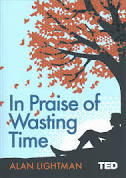
Alan Lightman, novelist and MIT Professor has written a eulogy to what he calls wasting time and has recommended wasting time to save us from the contemporary malady of being ever connected. We are always surrounded by gadgets lighting up with notifications every now and then. Lightman calls this network of connections – “the Grid.” This omnipresent grid is- “a vast and all-consuming network” which is eating up the tranquility of life.
He is of the opinion that we should take out some time from our feverish run for material progress and sit still doing nothing, with our complete attention focused on our own self- no other person, gadget, book or any other thing that will distract us or take us away from ourselves. Lightman recalls how, as a child, while returning from school, he and other children used to enjoy the walk back home. They would stop by and enjoy the nature, play with trees, flowers and animals and with no purpose, no goal- just pure pleasure. Now, every child has to run- wake up in hurry, get ready in hurry, board the school bus and spend the whole day in strict discipline and come back exhausted, physically and mentally. Same is the plight of the parents. They too, are breathlessly running in the race of life, not knowing where they are headed. They are taking life for granted as if they would live forever. Both children and adults have lost their ability to focus, to sit still silently for fifteen minutes in their own company. This urge to be connected with the world forever, is fatal. It is leading the whole world to a pandemic of anxiety, depression and other such ailments. Simplicity and joy of life are fast ebbing out.
Lightman, hence, wants us to pause, take a breath, reconsider our priorities and have a relook at our habits. He wants us to slow down and reduce the fever of life. It is vital to understand that life is precious and it is indispensable to spend time with our own self. One can do this by simply sitting silent, sitting still or doing activities that give us unconditional pleasure without sucking our vital energy. In short, Lightman has advocated detoxification of the mind by taking break and disconnecting from “the Grid” and spend time in activities with no goal. Robert Louis Stevenson, long before him, wrote a famous essay – An Apology for Idlers– where he hailed the idea of idling.
Lightman’s slender volume is full of engaging and profound thought and brings to our mind thoughts we never had before and things we never noticed. It is, however, important to look at his thoughts in a sympathetic light. We will miss the whole point of this book, if we do not appreciate his view of life.

